Disseminated on behalf of PowerBank Corporation.
It was probably one of the biggest things to happen in the world of energy in more than a century. But few news outlets picked it up.
I’m not sure why that is, but if you’re keen to profit from the transition of the global energy economy, you need to hear this.
According to Bloomberg data, the global benchmark cost for a four-hour battery project fell 27% year-on-year to $78 per megawatt-hour (MWh) in 2025. That’s a record low since
Bloomberg began tracking costs in 2009.
That’s notable on its own. But what makes it more interesting is the timing. Because while battery costs dropped sharply, the cost of other clean energy technologies, like solar and wind, actually rose modestly last year.
In other words, storage is getting cheaper just when it matters most. And that changes the equation.
Batteries: The Great Problem Solver
For years, solar’s biggest limitation wasn’t cost; it was timing. Solar power is cheap, but it’s intermittent. Battery storage solves that problem.
It allows utilities to capture cheap daytime solar energy and shift it into higher-value evening hours, effectively turning solar into a more reliable, dispatchable power source.
And now that storage costs are falling this quickly, the combined system – solar + storage – is becoming increasingly competitive with traditional power sources.
That’s the part you should focus on because this isn’t just about batteries getting cheaper. It’s about solar becoming more usable, more flexible, and ultimately more valuable. And as that happens, solar doesn’t just grow, it gains market share faster than expected.
Make no mistake: once a technology becomes both cheaper and more reliable, adoption doesn’t move in a straight line; it accelerates. That’s the dynamic now starting to take shape. And it suggests the energy transition may not just continue, but actually speed up.
One company in particular positioned to take full advantage of this is PowerBank Corp. (NASDAQ: SUUN).
PowerBank for the Win
One thing you must understand is that PowerBank isn’t just another energy company.
It’s actively positioning itself around infrastructure tied to the next phase of the energy transition: the integration of distributed energy systems, storage, and advanced power networks.
That distinction matters. Because the opportunity in energy isn’t just about generating power anymore, it’s about managing, storing, and distributing it more efficiently.
As solar deployment accelerates (driven in part by falling storage costs), the grid becomes more complex:
- More intermittent generation
- More localized energy production
- Greater need for storage and balancing
- Increased demand for smart infrastructure
That’s exactly where PowerBank’s strategy fits.
You see, it’s very easy to just focus on the obvious players: solar panel manufacturers. wind turbine companies, battery producers. But the real leverage often shows up one layer deeper: in the infrastructure that makes these systems work together.
And that’s where the opportunity begins to expand.
As solar gains market share more quickly, it creates a cascading effect:
- Utilities need to upgrade transmission and distribution systems.
- Grid operators need better balancing and storage solutions.
- Energy systems become more decentralized.
- Demand for integrated infrastructure rises
In other words, the growth of solar doesn’t just benefit solar companies. It drives demand across the entire energy ecosystem. And companies positioned at that intersection (between generation, storage, and infrastructure) can benefit from multiple overlapping trends at once.
Certainly, this is how PowerBank is positioned.
The company already has more than 100 MW of completed projects and a development pipeline exceeding 1 GW. Indeed, PowerBank is at the right place at the right time. And with battery costs plummeting, this only strengthens the company’s position as one of the most active solar + storage developers in North America.
In fact, just this week, the company announced that it now has 42 MW across 9 projects advancing under spring mobilization in New York. If you’re unfamiliar, spring mobilization is the initial stage of construction, which includes site preparation.
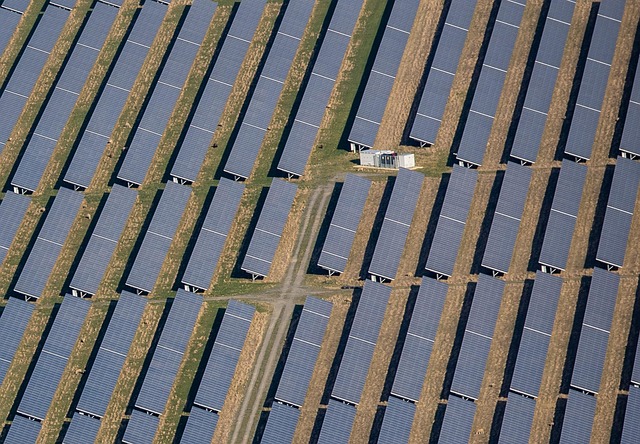
The Projects include rooftop, carport, and ground-mounted solar with a combined generation capacity of 42.24 MW, as well as battery energy storage systems with a generation capacity of 21.76 MWh. You can read more about those here.
Of course, PowerBank isn’t the only stock to benefit from this transition. Certainly, there are others, such as NextEra Energy (NYSE: NEE) and Canadian Solar (NASDAQ: CSIQ), but if you’re looking to get the most bang for your buck, PowerBank is where you should take a look, because unlike NEE and CSIQ, it’s still under Wall Street’s radar and trading at a discount.
Invest accordingly.
Disclaimer
There are several risks associated with the development of the Projects. These Projects require financing and final permits to commence construction. PowerBank intends to either finance these projects directly to be owned as IPP assets, sell Projects to third parties and continue as EPC contractor or some combination of these two strategies. As a result the development of any project is subject to receipt of a community solar contract, receipt of required permits, the availability of third-party financing arrangements for the Company and the risks associated with the construction of a solar power project. In addition, governments may revise, reduce or eliminate incentives and policy support schemes for solar power, which could result in future projects no longer being economic. Please refer to “Forward-Looking Statements” for additional discussion of the assumptions and risk factors associated with the Projects and statements made in this press release.
This report contains forward-looking statements and forward-looking information within the meaning of Canadian securities legislation (collectively, "forward-looking statements") that relate to the Company's current expectations and views of future events. Any statements that express, or involve discussions as to, expectations, beliefs, plans, objectives, assumptions or future events or performance (often, but not always, through the use of words or phrases such as "will likely result", "are expected to", "expects", "will continue", "is anticipated", "anticipates", "believes", "estimated", "intends", "plans", "forecast", "projection", "strategy", "objective" and "outlook") are not historical facts and may be forward-looking statements and may involve estimates, assumptions and uncertainties which could cause actual results or outcomes to differ materially from those expressed in such forward-looking statements. In particular and without limitation, this report contains forward-looking statements pertaining to the Company’s expectations regarding its industry trends and overall market growth; the Company’s growth strategies the expected energy production from the solar power projects mentioned in this press release; the details of mobilization activities; the number of homes expected to be powered; the expected savings for local residents; the receipt of additional project incentives; and the size of the Company’s development pipeline. No assurance can be given that these expectations will prove to be correct and such forward-looking statements included in this report should not be unduly relied upon. These statements speak only as of the date of this report.
Forward-looking statements are based on certain assumptions and analyses made by the Company in light of the experience and perception of historical trends, current conditions and expected future developments and other factors it believes are appropriate, and are subject to risks and uncertainties. In making the forward looking statements included in this report, the Company has made various material assumptions, including but not limited to: obtaining the necessary regulatory approvals; that regulatory requirements will be maintained; general business and economic conditions; the Company’s ability to successfully execute its plans and intentions; the availability of financing on reasonable terms; the Company’s ability to attract and retain skilled staff; market competition; the products and services offered by the Company’s competitors; that the Company’s current good relationships with its service providers and other third parties will be maintained; and government subsidies and funding for renewable energy will continue as currently contemplated. Although the Company believes that the assumptions underlying these statements are reasonable, they may prove to be incorrect, and the Company cannot assure that actual results will be consistent with these forward-looking statements. Given these risks, uncertainties and assumptions, investors should not place undue reliance on these forward-looking statements.
Whether actual results, performance or achievements will conform to the Company’s expectations and predictions is subject to a number of known and unknown risks, uncertainties, assumptions and other factors, including those listed under "Forward-Looking Statements" and "Risk Factors" in the Company’s most recently completed Annual Information Form, and other public filings of the Company, which include: the Company may be adversely affected by volatile solar power market and industry conditions; the execution of the Company’s growth strategy depends upon the continued availability of third-party financing arrangements; the Company’s future success depends partly on its ability to expand the pipeline of its energy business in several key markets; governments may revise, reduce or eliminate incentives and policy support schemes for solar and battery storage power; general global economic conditions may have an adverse impact on our operating performance and results of operations; the Company’s project development and construction activities may not be successful; developing and operating solar Project exposes the Company to various risks; the Company faces a number of risks involving Power Purchase Agreements (“PPAs”) and project-level financing arrangements; any changes to the laws, regulations and policies that the Company is subject to may present technical, regulatory and economic barriers to the purchase and use of solar power; the markets in which the Company competes are highly competitive and evolving quickly; an anti-circumvention investigation could adversely affect the Company by potentially raising the prices of key supplies for the construction of solar power projects; foreign exchange rate fluctuations; a change in the Company’s effective tax rate can have a significant adverse impact on its business; seasonal variations in demand linked to construction cycles and weather conditions may influence the Company’s results of operations; the Company may be unable to generate sufficient cash flows or have access to external financing; the Company may incur substantial additional indebtedness in the future; the Company is subject to risks from supply chain issues; risks related to inflation and tariffs; unexpected warranty expenses that may not be adequately covered by the Company’s insurance policies; if the Company is unable to attract and retain key personnel, it may not be able to compete effectively in the renewable energy market; there are a limited number of purchasers of utility-scale quantities of electricity; compliance with environmental laws and regulations can be expensive; corporate responsibility may adversely impose additional costs; the future impact of any global pandemic on the Company is unknown at this time; the Company has limited insurance coverage; the Company will be reliant on information technology systems and may be subject to damaging cyberattacks; the Company may become subject to litigation; there is no guarantee on how the Company will use its available funds; the Company will continue to sell securities for cash to fund operations, capital expansion, mergers and acquisitions that will dilute the current shareholders; and future dilution as a result of financings.
The Company undertakes no obligation to update or revise any forward-looking statements, whether as a result of new information, future events or otherwise, except as may be required by law. New factors emerge from time to time, and it is not possible for the Company to predict all of them, or assess the impact of each such factor or the extent to which any factor, or combination of factors, may cause results to differ materially from those contained in any forward-looking statement. Any forward-looking statements contained in this report are expressly qualified in their entirety by this cautionary statement.
To learn more, watch Jeff Siegel’s full interview with PowerBank CEO Dr. Richard Lu and hear more about the company’s growth strategy, market expansion, and the opportunity ahead.



Publication Date
March 20, 2026
Category
Energy

Jeff Siegel
Senior Content Contributor