

Here’s an interesting fact …
For 28 months straight, solar has provided more new generating capacity than any other energy source. This, according to data from the Federal Energy Regulatory Commission (FERC).
As a result, installed utility-scale solar capacity now exceeds that of wind, hydropower, and nuclear. And FERC has estimated that solar will add another 86 gigawatts over the next three years, during which time solar capacity will surpass that of coal.
As reported by energy analyst Ken Bossong, from September 2023 to December, 2025, total utility-scale solar capacity grew from 91.82 GW to 164.53 GW. That means that no other energy source added even close to that amount of new capacity. This includes wind, which expanded by just 13.4 GW, and natural gas, by only 6.83 gigawatts.
Here’s what Bossong had to say about the latest data …
Should FERC’s three-year forecast materialize, by January 1, 2029, utility-scale solar would account for 17.6% of installed U.S. generating capacity - more than any other source besides natural gas (40.6%).
Furthermore, the capacity of the mix of all utility-scale renewable energy sources would be almost 39%. Inclusion of small-scale solar (assuming it retains its 25% share of all solar) could push solar’s share to over 20% and that of all renewables to over 40%, while that of natural gas would drop below 39%.
This is not trivial and further bolsters the argument that, in terms of energy investing, the largest growth opportunity lies in solar.
Especially now that solar stocks are coming off a reset.
The great solar reset
Over the past 18 to 24 months, solar stocks across the board were repriced aggressively.
Indeed, this sell-off didn’t go unnoticed. But it was never about the industry's long-term viability. It was simply driven by short-term pressures that hit all at once.
First came interest rates.
Solar is a financing-heavy business, whether it’s residential rooftop systems or massive utility-scale projects. When rates spiked, the economics of installing solar systems weakened overnight. Loans became more expensive, returns compressed, and demand slowed, especially on the residential side.
At the same time, the industry ran into an inventory problem.
During the post-pandemic boom, companies ramped up production and ordering to meet surging demand. But when that demand cooled, the channel was left with excess supply. That forced price cuts, squeezed margins, and dragged down earnings.
Layer on policy uncertainty (delays in incentives, questions around tariffs), and you have the perfect environment for investors to hit the exit button.
The result wasn’t just a pullback. It was a repricing. High-growth solar companies that once traded like premium tech names were suddenly valued more like cyclical industrial businesses.
In other words, the market stopped believing the growth story. At least temporarily.
But here’s where things get interesting.
While sentiment remains cautious, the underlying fundamentals are improving.
The return of demand
Demand isn’t just stabilizing, it’s accelerating again, particularly on the utility side.
The rise of AI-driven data centers, electrification trends, and grid expansion are all driving a surge in electricity demand. And solar remains the fastest and most scalable way to meet that demand.
At the same time, costs are moving in the right direction.
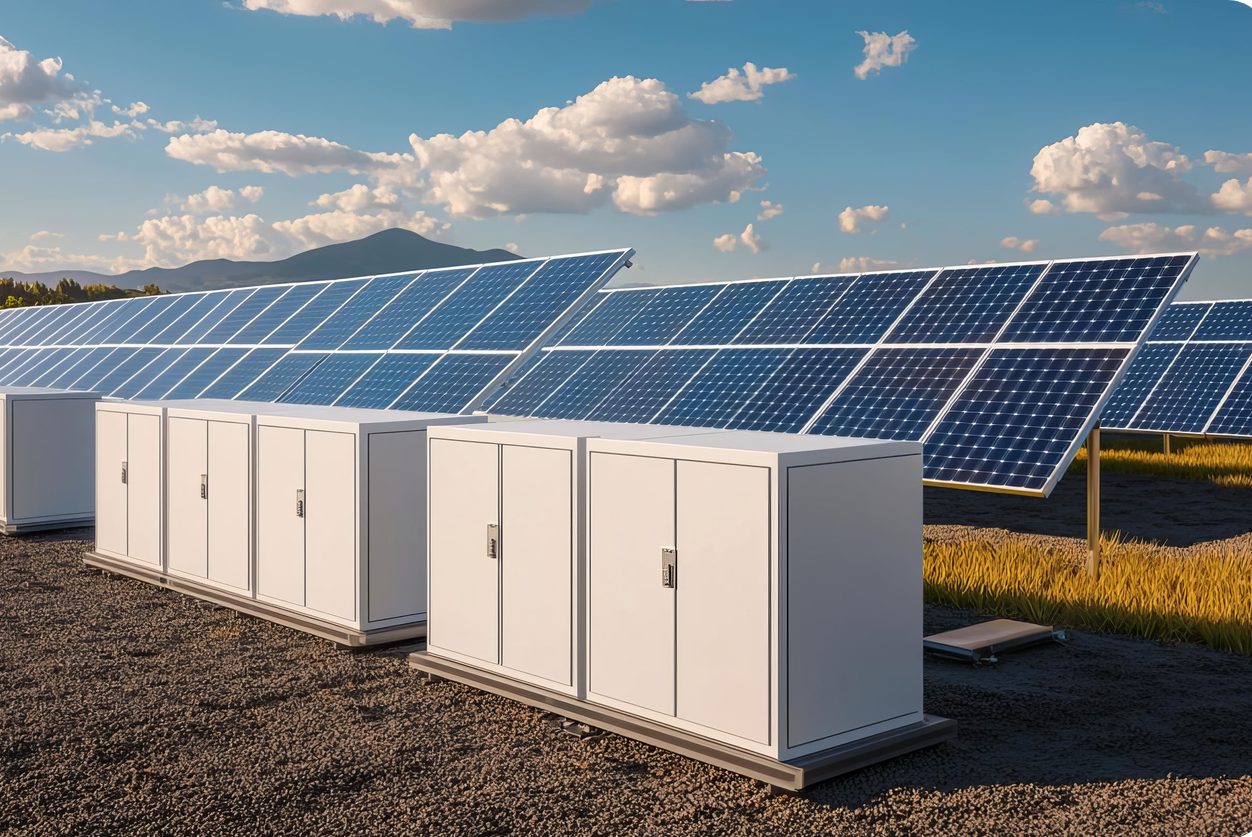
Solar panels are getting cheaper again, and battery storage (which is critical for smoothing intermittent energy) is seeing rapid cost declines. That combination improves project economics and makes new installations more attractive.
Indeed, the most attractive solar stocks right now are those connected to solar + battery storage projects. These include, but are not limited to …
- NextEra Energy (NYSE: NEE)
- PowerBank Corporation (NASDAQ: SUUN)
- Ørsted (OTCBB: DNNGY)
- Clearway Energy (NYSE: CWEN)
- Canadian Solar (NASDAQ: CSIQ)
The data are clear: the future of energy will be heavily weighted in solar.
Invest accordingly.



Publication Date
April 3, 2026
Category
Energy

Jeff Siegel
Senior Content Contributor