

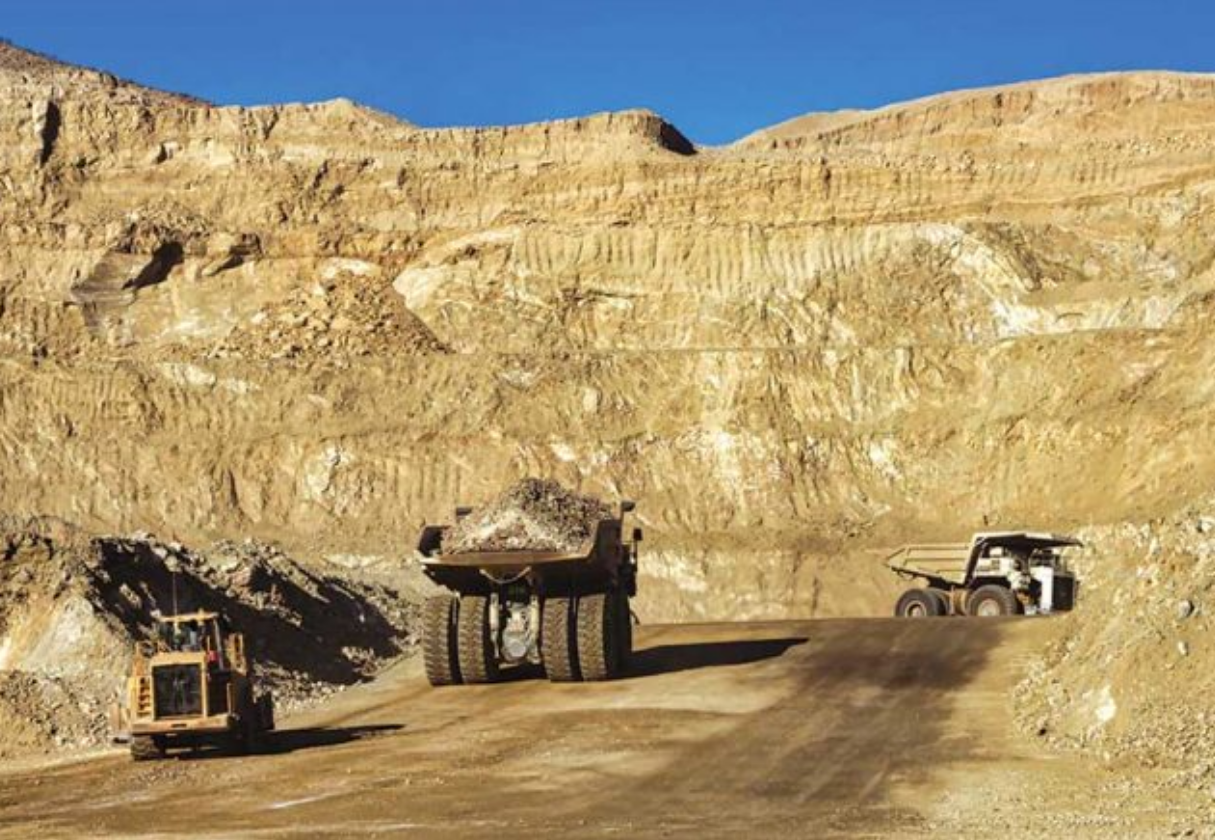
Newmont (NYSE: NEM) announced last week that its Red Chris mine in British Columbia won the regulatory approvals it needs to move from open-pit mining to an underground block-cave operation, extending the mine's life into the mid-2040s.
Here's what actually cleared.
British Columbia signed off on an amended Environmental Assessment Certificate and an amended Mines Act permit, both reached through a consent-based process with the Tahltan Nation, on whose territory the mine sits. That last detail is why this matters more than a routine permit.
Why the approval is the hard part
You see, in modern Canadian mining, the geology is rarely the problem. The approvals are. A copper-gold deposit can sit in the ground for decades while a company fights over an environmental certificate and Indigenous consent.
Newmont just got both at once.
The deposit itself is enormous. The Red Chris porphyry holds an estimated 20 million ounces of gold and 13 billion pounds of copper across measured, indicated, and inferred resources. Block caving, the method now approved, undercuts a large section of ore and lets it collapse under its own weight. It's cheaper per tonne than open-pit once it's running, which is the whole point of going underground here.
Newmont operates Red Chris and holds the majority stake, with Imperial Metals (TSX: III) owning the other 30%.
What it means for the copper story
This is where it gets interesting for anyone watching copper supply.
Newmont says the block cave could lift Canada's total copper production by roughly 15%. That's not 15% for Newmont. That's 15% for the entire country, from one project.
Worth noting: Newmont bought its way into this when it acquired Newcrest Mining for about $17 billion in 2023, a deal that handed it Red Chris and deepened its copper exposure right as the metal became strategic. That bet is starting to pay off in permits.
To be sure, the approval doesn't mean shovels in the ground, but it does set up the decision that does. Newmont is still finishing a definitive feasibility study and a detailed cost estimate, and a final investment decision isn't expected until later this year.
Now, consider what still has to go right:
* The feasibility study has to pencil out
* The board has to approve the capital, which runs into the billions
* Construction means more than 1,800 jobs and years of build-out
* First underground ore is well down the road
There's also a wrinkle in the timeline. Newmont and most coverage put the extended mine life in the mid-2040s, but the BC government's own release frames the extension as reaching 2038. Same approval, two different horizons, depending on who's describing it.
If you own Newmont, none of this changes the company overnight. NEM is a roughly gold-weighted major, and Red Chris is one asset in a deep portfolio.
But the block cave is the kind of long-life, low-cost copper-gold operation that's hard to replace once it's gone. Getting it permitted through a consent-based deal with the Tahltan Nation removes the single biggest reason projects like this die. The capital decision is the next gate to watch, and it's coming before year-end.





Publication Date
June 24, 2026
Category
Industrials

Jeff Siegel
Senior Content Contributor