
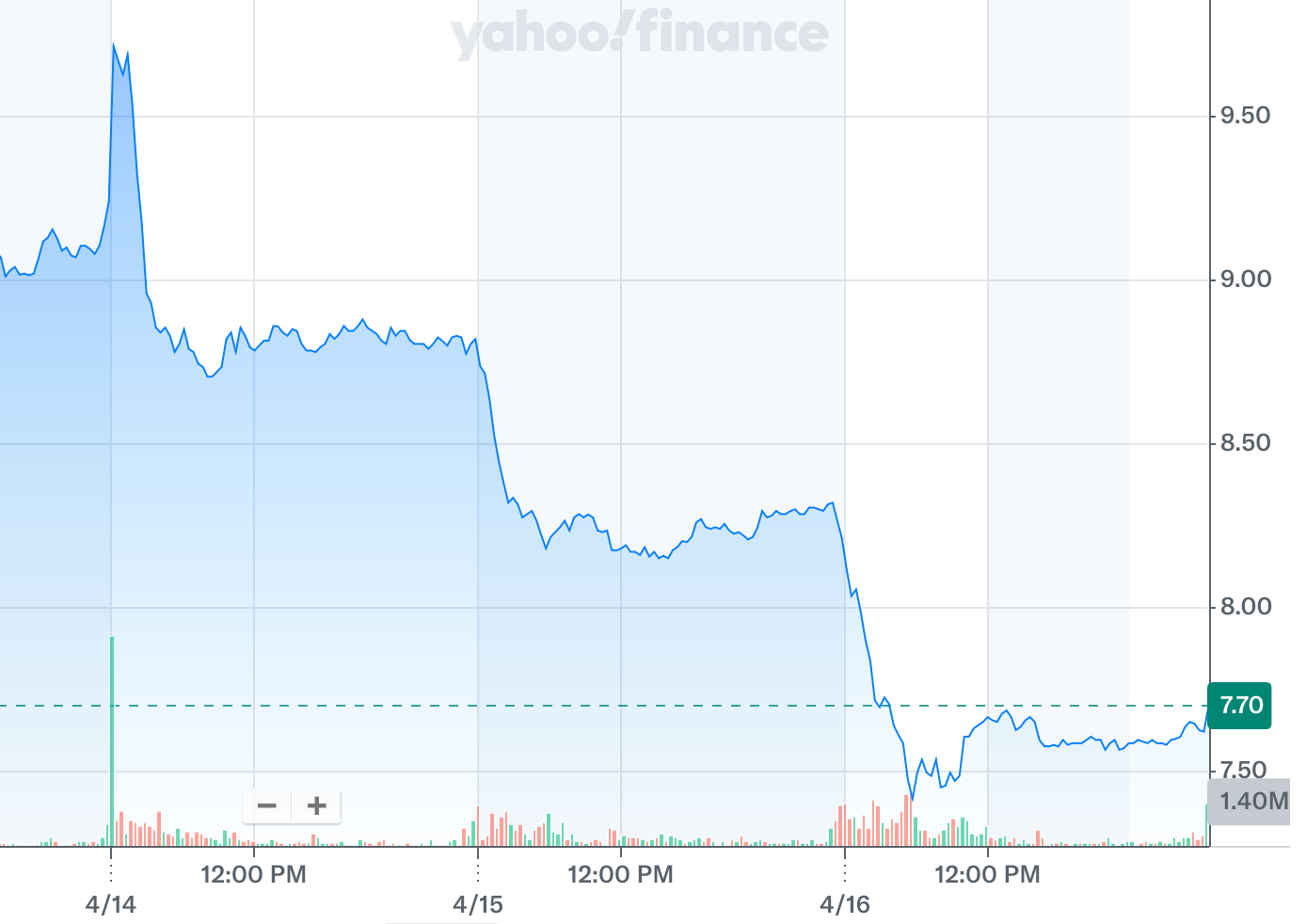
This week, shares of electric car manufacturer Lucid Group (NASDAQ: LCID) fell 7.4% after the company pre-announced first-quarter revenue that came in well below Wall Street expectations and disclosed a capital raise of more than $1 billion.
Let’s break it down …
The revenue miss
The revenue miss is tied primarily to lower-than-expected deliveries and timing-related production issues, continuing a trend that has defined Lucid’s operating profile over the past several quarters.
While the company has consistently pointed to supply chain constraints and manufacturing ramp complexity as limiting factors, the Q1 shortfall suggests those issues have not been fully resolved. More importantly, it raises a structural question: whether production is simply being pushed out into future quarters or whether demand conversion is also lagging expectations.
Lucid did not indicate a change to its broader annual production guidance, which isn’t particularly reassuring. When a company misses early in the year and maintains full-year targets, it implies a heavier back-end weighting, meaning more vehicles must be produced and delivered later in the year to compensate. That increases execution risk. Any further delays or inefficiencies could compound the gap between projections and actual results.
Demand concerns
From a demand standpoint, the environment is also becoming more complex.
Lucid operates almost exclusively in the premium EV segment, where pricing power has historically been stronger but is now facing pressure.
Rising competition from both legacy OEMs and newer entrants, and a more price-sensitive consumer backdrop are two important factors that can affect order conversion. Without broader product diversification, particularly into lower price points, the company remains exposed to a narrower buyer base.
Of course, Lucid’s technology, particularly in range efficiency, battery architecture, and drivetrain performance, is widely regarded as competitive at the high end of the EV market. The company also continues to pursue strategic partnerships, including potential fleet and mobility integrations, which could diversify revenue streams over time.
But those are longer-duration drivers.
In the near term, the market is focused on three variables:
- Delivery and production consistency
- Revenue conversion relative to guidance
- Capital intensity and funding requirements
The Q1 pre-announcement and capital raise directly impact all three.
The revenue miss underscores ongoing variability in execution, particularly around production timing and delivery cadence.
A new $1 billion capital raise, while necessary, also reinforces the company’s reliance on external financing and highlights the distance still to profitability. Taken together, these developments explain investor uneasiness.
While Lucid does make some amazing cars, until the company demonstrates sustained improvement in output, tighter alignment between guidance and results, and a credible path to reducing cash burn, the stock is likely to remain driven by operational updates and financing activity rather than longer-term narrative.
Tread lightly.






Publication Date
April 16, 2026
Category
Industrials

Jeff Siegel
Senior Content Contributor