
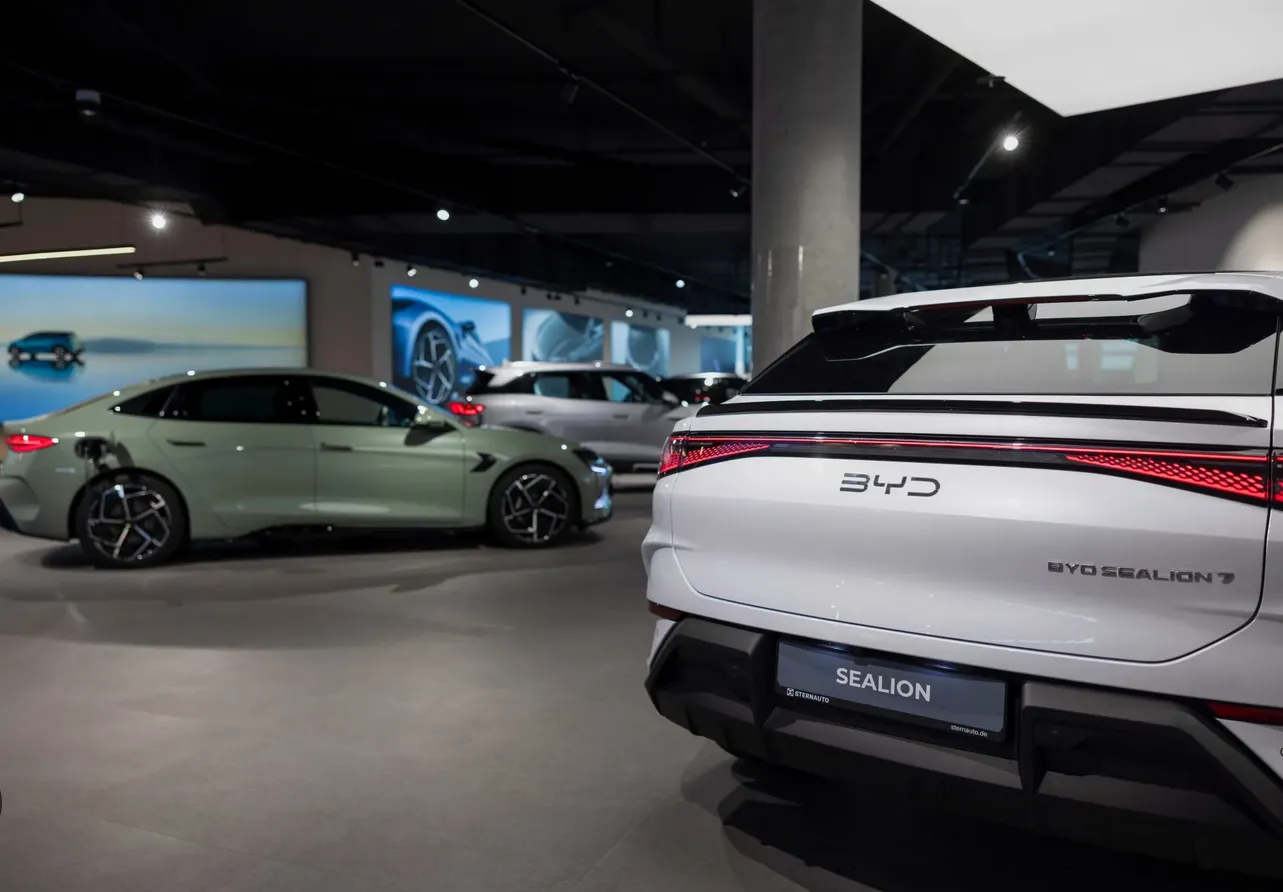
BYD (OTCBB: BYDDY) just unveiled its first in-house chip for self-driving cars, the Xuanji A3, which the company calls China's first automotive-grade processor built specifically for autonomous driving. It's already in mass production.
Most of the coverage is fixated on raw performance. BYD says a cluster of three of these chips delivers more than 2,100 TOPS of computing power. TOPS stands for trillions of operations per second. It's a measure of how much data the chip can crunch.
But for you, that number only matters if it translates into an advantage. And on raw output alone, it doesn't.
It's Not the Fastest Chip. It's the Most Controlled One
Here's the part you should pay attention to. BYD itself isn't claiming the A3 is the most powerful silicon on the road. Nvidia's automotive chips still out-muscle it on raw output.
What BYD is claiming is something different. By pairing the chip with its own algorithms, it says computing power utilization jumped 100 percent. In plain English, BYD squeezes twice the usable performance out of the same silicon because it designed both halves.
That's the real edge here. BYD now says it's the only automaker on the planet that runs its own wafer fabs and controls every step from chip design to testing.
BYD's Chip Business Is Bigger Than Many Investors Realize
Now, consider what BYD has built beyond its vehicle business.
The company has invested more than $14 billion in chip research and development, employs more than 7,000 people focused on semiconductor R&D, and has shipped over 2,000 chip products to date.
These numbers suggest BYD is taking a long-term approach to controlling more of its technology stack, from batteries and power electronics to semiconductors. In other words, BYD increasingly looks like a semiconductor company that also happens to build cars.
The Risk Is the Thing the Spec Sheet Hides
To be sure, owning the entire stack cuts both ways.
When you design the chip, write the software, and build the car, every flaw is yours alone. There's no supplier to share the blame or the warranty cost. Nvidia's customers get to point at Nvidia. BYD doesn't.
There's also a regulatory question. The A3 is built to support driving systems that take the human out of the loop in certain conditions, but regulators in China and abroad have been cautious about approving cars that drive themselves at scale. A chip that supports that capability is not the same as a fleet that's legally allowed to use it.
And $14 billion is a lot of capital tied up in a bet that controlling the whole stack beats simply buying the best part off the shelf. If Nvidia keeps widening its lead on raw capability, that spending could start to look heavy rather than smart.
So the spec sheet leads with the performance number. The thing actually worth watching is margin and control. Whoever owns the silicon owns the software, and whoever owns the software owns the cost structure of the car.
If you're watching the EV space from the sidelines, that's the shift to track, not who has the biggest performance number this quarter, but who no longer has to ask a supplier for permission. The risk is real, but the integration race is already reshaping the industry.


Publication Date
June 2, 2026
Category
Energy

Jeff Siegel
Senior Content Contributor