For years, renewable energy bulls have made the same prediction: eventually, solar would stop being an "alternative" source of electricity and become the backbone of the grid.
That moment may have just arrived.
According to new data from energy think tank Ember, solar generated roughly 22.1% of Europe's electricity in June, making it the continent's largest single source of electricity for the month for the first time ever. It edged out nuclear power at about 21.8%, while wind contributed roughly 16%. Fossil fuels continued their long-term decline as coal generation fell to record lows.
Indeed, this is evidence that one of the world's largest electricity markets is undergoing a structural transformation that favors renewable energy.
This wasn't supposed to happen this quickly
Not long ago, critics argued that solar could never become a meaningful part of the power grid because it was too expensive, too intermittent, and too dependent on government subsidies.
Those arguments have steadily lost credibility.
Over the past decade, Europe has installed solar capacity at a breathtaking pace. Costs have collapsed, panel efficiencies have improved, and utilities have become far more sophisticated at integrating renewable energy into the grid. The result is a remarkable shift in the continent's electricity mix.
Just a few years ago, coal and natural gas routinely dominated European power generation. Today, renewables are increasingly setting the price of electricity during daylight hours. That's a profound change.
Electricity markets rarely move quickly. Power plants are billion-dollar assets designed to operate for decades. When a new technology starts displacing incumbent generation across an entire continent, it's usually because the economics have fundamentally changed.
That's exactly what's happening.
The real story isn't solar panels
Many investors immediately think of solar manufacturers whenever they hear news like this.
That may actually be the least interesting opportunity.
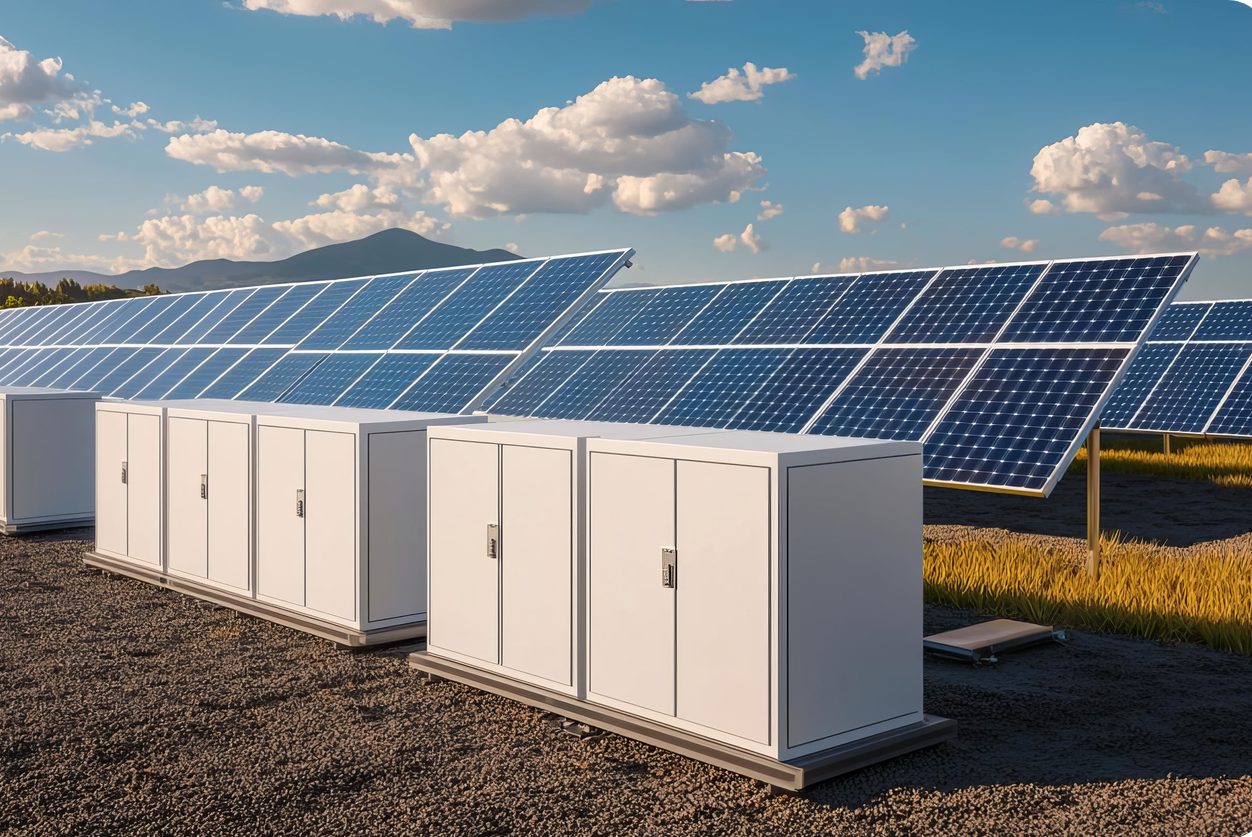
As solar penetration rises, entirely new industries become essential. Utilities need massive battery installations to store excess electricity generated during sunny afternoons. Grid operators need smarter transmission networks capable of moving renewable power across countries. Software companies are building artificial intelligence systems that forecast electricity demand, optimize battery charging, and balance increasingly complex grids in real time. Equipment manufacturers supplying inverters, transformers, high-voltage cables, cooling systems, and grid automation suddenly become just as important as companies making solar panels.
In other words, every additional gigawatt of solar creates demand far beyond the panel itself.
That's where some of the biggest investment opportunities may emerge.
Electricity demand is about to explode
The timing couldn't be better.
Artificial intelligence is rapidly becoming one of the largest new sources of electricity demand in decades.
Data centers already consume enormous amounts of power, and that demand is accelerating as hyperscalers race to build AI infrastructure. At the same time, electric vehicles continue replacing gasoline-powered cars, while heat pumps are increasingly replacing natural gas heating systems across Europe. All three trends point in the same direction. The world needs dramatically more electricity. Solar has become one of the fastest and cheapest ways to produce it.
That doesn't mean renewables will replace every other source overnight. Nuclear, hydroelectric power, natural gas, and energy storage will all remain critical pieces of a reliable grid. But this transition is hard to ignore.
It’s accelerating!
Markets often focus on quarterly earnings.
Transformational shifts unfold over decades.
Europe's latest milestone suggests we're watching one of those long-term transitions happen in real time.
Solar didn't become Europe's largest electricity source because of politics or headlines. It got there because, in many cases, it's now the lowest-cost option available. History shows that when the cheapest technology is also scalable, adoption rarely slows. It accelerates. And that's exactly what we're witnessing right now.




Publication Date
July 19, 2026
Category
Energy

Jeff Siegel
Senior Content Contributor