Disseminated on behalf of PowerBank Corporation.
Babcock & Wilcox (NYSE: BW) soared more than 45.6% earlier this week after it announced that the company received approval to proceed on a $2.4 billion design-build agreement with Base Electron to deliver 1.2 GW of new generation capacity.
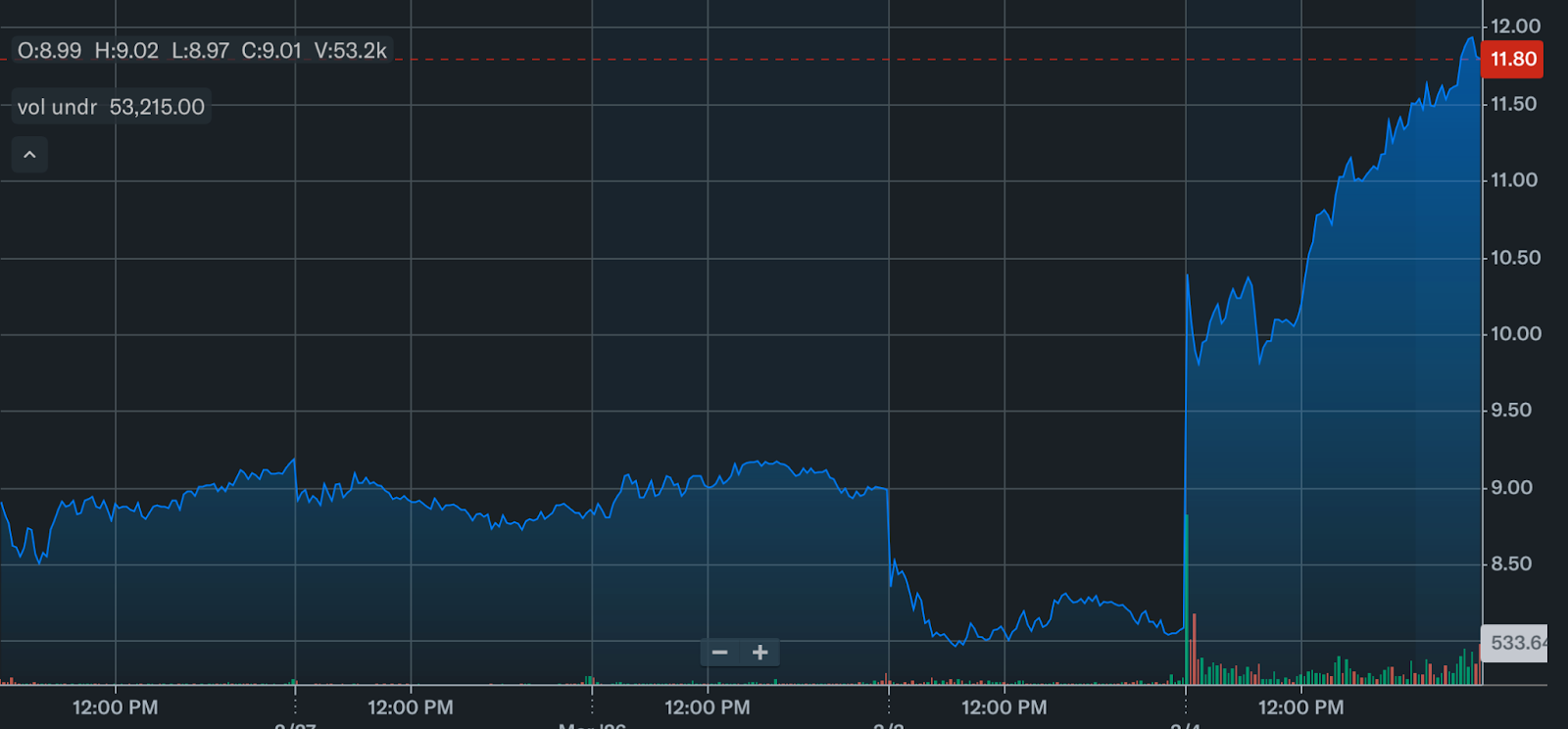
That power will ultimately supply AI factory campuses operated by Applied Digital, which are being built to support the rapidly expanding demand for high-performance computing.
To be sure, receiving “full notice to proceed” is an important step in large infrastructure projects. It means the necessary financing and contractual milestones have been met, and that full construction and development work can now proceed.
For Babcock & Wilcox, that represents a major project moving from planning into execution. And for the broader market, it signals something else: AI-driven energy infrastructure is beginning to move from concept to reality.
If you’re a regular reader of these pages, you know that the race to build AI computing capacity is happening at an extraordinary pace.
Technology companies and data center operators are racing to deploy new facilities capable of supporting the massive workloads associated with artificial intelligence. But those facilities require more than advanced processors and cooling systems. They also require an enormous and reliable electricity supply.
That’s creating opportunities across several sectors, including power generation, grid infrastructure, energy storage, and data center development.
This is actually one of the reasons we’re so bullish on PowerBank Corporation (NASDAQ: SUUN).
This small Canadian outfit is actually an emerging player when it comes to power generation, energy storage, and data center development. Check it out …
Power Generation Development
PowerBank develops solar power projects across North America. These projects are designed to supply electricity to regional grids or directly support large commercial and industrial users.
As electrification accelerates and AI computing consumes more power, the ability to bring new-generation capacity online is becoming increasingly valuable. Energy developers with project pipelines can play an important role in meeting the growing demand for electricity tied to digital infrastructure.
Energy Storage Integration
The company is also involved in battery energy storage development, which has become essential to modern grid projects.
Energy storage allows excess electricity generated during periods of high production to be stored and dispatched when demand increases. This improves grid stability and enables renewable energy to support round-the-clock power needs.
For large electricity consumers, such as hyperscale data centers, storage can help ensure reliable and consistent energy delivery, making it an increasingly critical component of modern power infrastructure.
Supporting the Data Center Economy
Another area where PowerBank is positioning itself is energy solutions for data center development.
Modern AI data centers require an enormous and reliable electricity supply. As these facilities expand across North America, companies that can combine generation capacity with energy storage and infrastructure development are becoming valuable partners in building the power backbone required to support them.
In other words, the growth of artificial intelligence is creating opportunities not only for chip companies but also for energy infrastructure developers capable of powering the digital economy.
The Space Data Center Concept
One of the more futuristic ideas associated with PowerBank involves the concept of space-based data centers.
The company has discussed potential involvement in projects exploring whether computing infrastructure could eventually be deployed in orbit, where abundant solar energy and the cold vacuum of space could provide advantages for powering and cooling large data processing systems.
While still in early conceptual stages, the idea reflects a broader trend: as computing demand grows exponentially, companies and researchers are exploring entirely new ways to power and operate digital infrastructure. And PowerBank is collaborating with Orbit AI, an early innovator in this sector.
The Bigger Picture
Historically, energy developers, data center builders, and technology companies operated in largely separate industries. Today, those lines are beginning to blur.
Artificial intelligence, cloud computing, and digital infrastructure are driving a massive increase in electricity demand, creating opportunities for companies operating across energy generation, storage, and computing infrastructure.
PowerBank is positioning itself at the crossroads of three rapidly expanding sectors. And with the added exploration of space-based computing concepts, the company is also looking toward the long-term future of digital infrastructure.
As AI continues to expand globally, the companies capable of powering and supporting that infrastructure could play an increasingly important role in the next generation of technology and energy systems.
Invest accordingly.
Forward Looking Statements
This report contains forward-looking statements and forward-looking information within the meaning of Canadian securities legislation (collectively, “forward-looking statements”) that relate to the Company’s current expectations and views of future events. Any statements that express, or involve discussions as to, expectations, beliefs, plans, objectives, assumptions or future events or performance (often, but not always, through the use of words or phrases such as “will likely result”, “are expected to”, “expects”, “will continue”, “is anticipated”, “anticipates”, “believes”, “estimated”, “intends”, “plans”, “forecast”, ”projection”, “strategy”, “objective” and “outlook”) are not historical facts and may be forward-looking statements and may involve estimates, assumptions and uncertainties which could cause actual results or outcomes to differ materially from those expressed in such forward-looking statements. In particular and without limitation, this report contains forward-looking statements pertaining to the Company’s expectations regarding industry trends and overall market growth; intentions of data centers and large technology companies regarding power needs, contracts or acquisitions; the development of solar power and battery energy storage projects; the details of the collaboration with Orbit AI and its expected benefits; the Company’s contributions towards the collaboration with Orbit AI; the timelines for Orbit AI’s operations the Company’s growth strategies, and the size of the Company’s development pipeline. No assurance can be given that these expectations will prove to be correct and such forward-looking statements included in this report should not be unduly relied upon. These statements speak only as of the date of this report.
Forward-looking statements are based on certain assumptions and analyses made by the Company in light of the experience and perception of historical trends, current conditions, and expected future developments and other factors it believes are appropriate, and are subject to risks and uncertainties. In making the forward looking statements included in this report, the Company has made various material assumptions, including but not limited to: t ; Orbit AI and the Company are able to agree on commercial terms for the announced collaboration; obtaining the necessary regulatory approvals; that regulatory requirements will be maintained; general business and economic conditions; the Company’s ability to successfully execute its plans and intentions; the availability of financing on reasonable terms; the Company’s ability to attract and retain skilled staff; market competition; the products and services offered by the Company’s competitors; that the Company’s current good relationships with its service providers and other third parties will be maintained; and government subsidies and funding for renewable energy will continue as currently contemplated. Although the Company believes that the assumptions underlying these statements are reasonable, they may prove to be incorrect, and the Company cannot assure that actual results will be consistent with these forward-looking statements. Given these risks, uncertainties and assumptions, investors should not place undue reliance on these forward-looking statements.
Whether actual results, performance or achievements will conform to the Company’s expectations and predictions is subject to a number of known and unknown risks, uncertainties, assumptions and other factors, including those listed under “Forward-Looking Statements” and “Risk Factors” in the Company’s most recently completed Annual Information Form, and other public filings of the Company, which include: Orbit AI is unable to raise sufficient financing to complete its launch of satellites on the timelines proposed or at all; Orbit AI and the Company fail to agree on commercial terms for the announced collaboration; technical risks associated with Orbit AI’s planned operations; the Company may be adversely affected by volatile solar power market and industry conditions; the execution of the Company’s growth strategy depends upon the continued availability of third-party financing arrangements; the Company’s future success depends partly on its ability to expand the pipeline of its energy business in several key markets; governments may revise, reduce or eliminate incentives and policy support schemes for solar and battery storage power; general global economic conditions may have an adverse impact on our operating performance and results of operations; the Company’s project development and construction activities may not be successful; developing and operating solar Project exposes the Company to various risks; the Company faces a number of risks involving Power Purchase Agreements (“PPAs”) and project-level financing arrangements; any changes to the laws, regulations and policies that the Company is subject to may present technical, regulatory and economic barriers to the purchase and use of solar power; the markets in which the Company competes are highly competitive and evolving quickly; an anti-circumvention investigation could adversely affect the Company by potentially raising the prices of key supplies for the construction of solar power projects; foreign exchange rate fluctuations; a change in the Company’s effective tax rate can have a significant adverse impact on its business; seasonal variations in demand linked to construction cycles and weather conditions may influence the Company’s results of operations; the Company may be unable to generate sufficient cash flows or have access to external financing; the Company may incur substantial additional indebtedness in the future; the Company is subject to risks from supply chain issues; risks related to inflation and tariffs; unexpected warranty expenses that may not be adequately covered by the Company’s insurance policies; if the Company is unable to attract and retain key personnel, it may not be able to compete effectively in the renewable energy market; there are a limited number of purchasers of utility-scale quantities of electricity; compliance with environmental laws and regulations can be expensive; corporate responsibility may adversely impose additional costs; the future impact of any global pandemic on the Company is unknown at this time; the Company has limited insurance coverage; the Company will be reliant on information technology systems and may be subject to damaging cyberattacks; the Company may become subject to litigation; there is no guarantee on how the Company will use its available funds; the Company will continue to sell securities for cash to fund operations, capital expansion, mergers and acquisitions that will dilute the current shareholders; and future dilution as a result of financings.
The Company undertakes no obligation to update or revise any forward-looking statements, whether as a result of new information, future events or otherwise, except as may be required by law. New factors emerge from time to time, and it is not possible for the Company to predict all of them, or assess the impact of each such factor or the extent to which any factor, or combination of factors, may cause results to differ materially from those contained in any forward-looking statement. Any forward-looking statements contained in this report are expressly qualified in their entirety by this cautionary statement.
To learn more, watch Jeff Siegel’s full interview with PowerBank CEO Dr. Richard Lu and hear more about the company’s growth strategy, market expansion, and the opportunity ahead.




Publication Date
March 6, 2026
Category
Energy

Jeff Siegel
Senior Content Contributor