Disseminated on behalf of PowerBank Corporation
The rapid rise of artificial intelligence and cloud computing is forcing a fundamental rethink of U.S. power infrastructure.
Data centers, once a niche load, are now among the fastest-growing sources of electricity demand, pushing utilities and energy developers to plan for a future where compute growth and power generation are tightly linked.
That shift was underscored recently when NextEra Energy (NASDAQ: NEE) announced plans to develop 15 gigawatts of new generation capacity dedicated to data center hubs by 2035. The company says it already has roughly 20 GW of interest from large-load customers, much of it from hyperscale data center operators.
Branded internally as “15 by 35,” the initiative highlights how electrification tied to digital infrastructure is becoming a central growth engine for utilities.
You see, data centers sit at the core of modern digital life: powering AI models, cloud platforms, and global data flows. As these facilities multiply and workloads become more energy-intensive, electricity consumption from the sector is widely expected to roughly double by 2030. That growth is straining traditional grid models built around predictable, slower-growing demand.
To meet this challenge, utilities and developers are increasingly turning to renewable generation paired with grid-scale energy storage.
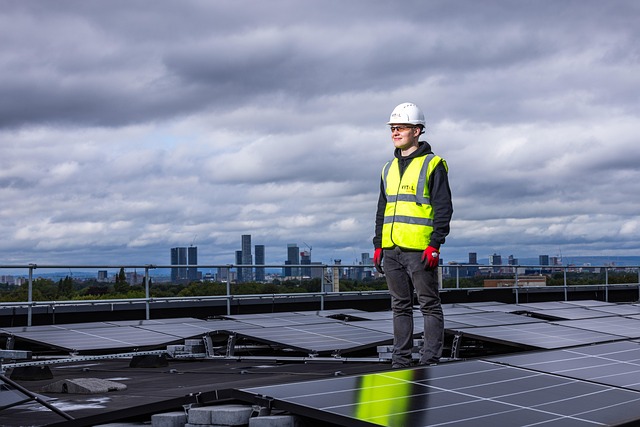
Solar and storage offer a scalable way to add capacity while addressing emissions goals and providing the reliability data centers require. Batteries, in particular, are becoming critical for smoothing variability and delivering continuous power to always-on facilities.
Now alongside large utilities, smaller renewable infrastructure developers are positioning themselves to serve this wave of demand, too. PowerBank Corporation (NASDAQ: SUUN) is one such example. The company develops solar photovoltaic projects and battery energy storage systems (BESS) and reports a development pipeline of more than one gigawatt across Canada and the United States.
PowerBank’s focus aligns closely with what data center operators are seeking:
- Solar plus storage solutions that deliver low-carbon electricity with high uptime
- Battery systems that help balance intermittent generation and support round-the-clock loads
- Targeted development intended by PowerBank in markets where power demand from data centers is accelerating
The company has also indicated interest in the support of emerging compute models, including more aggressive concepts such as space-based data infrastructure, underscoring how broadly it is thinking about future power demand.
Two Sides of the Same Trend
For a utility like NextEra, committing 15 GW of capacity to data center hubs represents a multi-billion-dollar build-out backed by long-term customer demand.
For developers like PowerBank, the same trend opens a strategic lane: supplying clean, dispatchable energy to a sector that is growing faster than the grid was originally designed to handle.
As data center construction continues at scale, the companies best positioned will be those that can deliver reliable power, fast deployment, and flexible storage. The convergence of AI, cloud computing, and clean energy is no longer theoretical; it is already reshaping how power infrastructure gets planned, financed, and built.
Bottom line: Data centers are becoming one of the most important drivers of electricity demand this decade. NextEra’s capacity targets illustrate the scale of what’s coming, while PowerBank’s solar and storage pipeline shows how renewable infrastructure developers can participate in powering the digital economy.
Disclaimer
PowerBank does not presently have any contracts with hyperscalers for power supply, sale of assets or a corporate transaction.
This report contains forward-looking statements and forward-looking information within the meaning of Canadian securities legislation (collectively, “forward-looking statements”) that relate to the Company’s current expectations and views of future events. Any statements that express, or involve discussions as to, expectations, beliefs, plans, objectives, assumptions or future events or performance (often, but not always, through the use of words or phrases such as “will likely result”, “are expected to”, “expects”, “will continue”, “is anticipated”, “anticipates”, “believes”, “estimated”, “intends”, “plans”, “forecast”, ”projection”, “strategy”, “objective” and “outlook”) are not historical facts and may be forward-looking statements and may involve estimates, assumptions and uncertainties which could cause actual results or outcomes to differ materially from those expressed in such forward-looking statements. In particular and without limitation, this report contains forward-looking statements pertaining to the Company’s expectations regarding industry trends and overall market growth; intentions of hyperscalers and large technology companies regarding power needs, contracts or acquisitions; the details of the collaboration with Orbit AI and its expected benefits; the Company’s contributions towards the collaboration with Orbit AI; the timelines for Orbit AI’s operations the Company’s growth strategies, and the size of the Company’s development pipeline. No assurance can be given that these expectations will prove to be correct and such forward-looking statements included in this report should not be unduly relied upon. These statements speak only as of the date of this report.
Forward-looking statements are based on certain assumptions and analyses made by the Company in light of the experience and perception of historical trends, current conditions and expected future developments and other factors it believes are appropriate, and are subject to risks and uncertainties. In making the forward looking statements included in this report, the Company has made various material assumptions, including but not limited to: t ; Orbit AI and the Company are able to agree on commercial terms for the announced collaboration; obtaining the necessary regulatory approvals; that regulatory requirements will be maintained; general business and economic conditions; the Company’s ability to successfully execute its plans and intentions; the availability of financing on reasonable terms; the Company’s ability to attract and retain skilled staff; market competition; the products and services offered by the Company’s competitors; that the Company’s current good relationships with its service providers and other third parties will be maintained; and government subsidies and funding for renewable energy will continue as currently contemplated. Although the Company believes that the assumptions underlying these statements are reasonable, they may prove to be incorrect, and the Company cannot assure that actual results will be consistent with these forward-looking statements. Given these risks, uncertainties and assumptions, investors should not place undue reliance on these forward-looking statements.
Whether actual results, performance or achievements will conform to the Company’s expectations and predictions is subject to a number of known and unknown risks, uncertainties, assumptions and other factors, including those listed under “Forward-Looking Statements” and “Risk Factors” in the Company’s most recently completed Annual Information Form, and other public filings of the Company, which include: Orbit AI is unable to raise sufficient financing to complete its launch of satellites on the timelines proposed or at all; Orbit AI and the Company fail to agree on commercial terms for the announced collaboration; technical risks associated with Orbit AI’s planned operations; the Company may be adversely affected by volatile solar power market and industry conditions; the execution of the Company’s growth strategy depends upon the continued availability of third-party financing arrangements; the Company’s future success depends partly on its ability to expand the pipeline of its energy business in several key markets; governments may revise, reduce or eliminate incentives and policy support schemes for solar and battery storage power; general global economic conditions may have an adverse impact on our operating performance and results of operations; the Company’s project development and construction activities may not be successful; developing and operating solar Project exposes the Company to various risks; the Company faces a number of risks involving Power Purchase Agreements (“PPAs”) and project-level financing arrangements; any changes to the laws, regulations and policies that the Company is subject to may present technical, regulatory and economic barriers to the purchase and use of solar power; the markets in which the Company competes are highly competitive and evolving quickly; an anti-circumvention investigation could adversely affect the Company by potentially raising the prices of key supplies for the construction of solar power projects; foreign exchange rate fluctuations; a change in the Company’s effective tax rate can have a significant adverse impact on its business; seasonal variations in demand linked to construction cycles and weather conditions may influence the Company’s results of operations; the Company may be unable to generate sufficient cash flows or have access to external financing; the Company may incur substantial additional indebtedness in the future; the Company is subject to risks from supply chain issues; risks related to inflation and tariffs; unexpected warranty expenses that may not be adequately covered by the Company’s insurance policies; if the Company is unable to attract and retain key personnel, it may not be able to compete effectively in the renewable energy market; there are a limited number of purchasers of utility-scale quantities of electricity; compliance with environmental laws and regulations can be expensive; corporate responsibility may adversely impose additional costs; the future impact of any global pandemic on the Company is unknown at this time; the Company has limited insurance coverage; the Company will be reliant on information technology systems and may be subject to damaging cyberattacks; the Company may become subject to litigation; there is no guarantee on how the Company will use its available funds; the Company will continue to sell securities for cash to fund operations, capital expansion, mergers and acquisitions that will dilute the current shareholders; and future dilution as a result of financings.
The Company undertakes no obligation to update or revise any forward-looking statements, whether as a result of new information, future events or otherwise, except as may be required by law. New factors emerge from time to time, and it is not possible for the Company to predict all of them, or assess the impact of each such factor or the extent to which any factor, or combination of factors, may cause results to differ materially from those contained in any forward-looking statement. Any forward-looking statements contained in this report are expressly qualified in their entirety by this cautionary statement.
To learn more, watch Jeff Siegel’s full interview with PowerBank CEO Dr. Richard Lu and hear more about the company’s growth strategy, market expansion, and the opportunity ahead.




Publication Date
February 2, 2026
Category
Energy

Jeff Siegel
Senior Content Contributor