

Immunovant (NASDAQ: IMVT) shares rallied sharply after the company reported positive new data from its ongoing potentially registrational trial evaluating IMVT-1402 in difficult-to-treat rheumatoid arthritis patients.
The numbers were strong enough that investors largely ignored weaker quarterly earnings results.
Check it out …
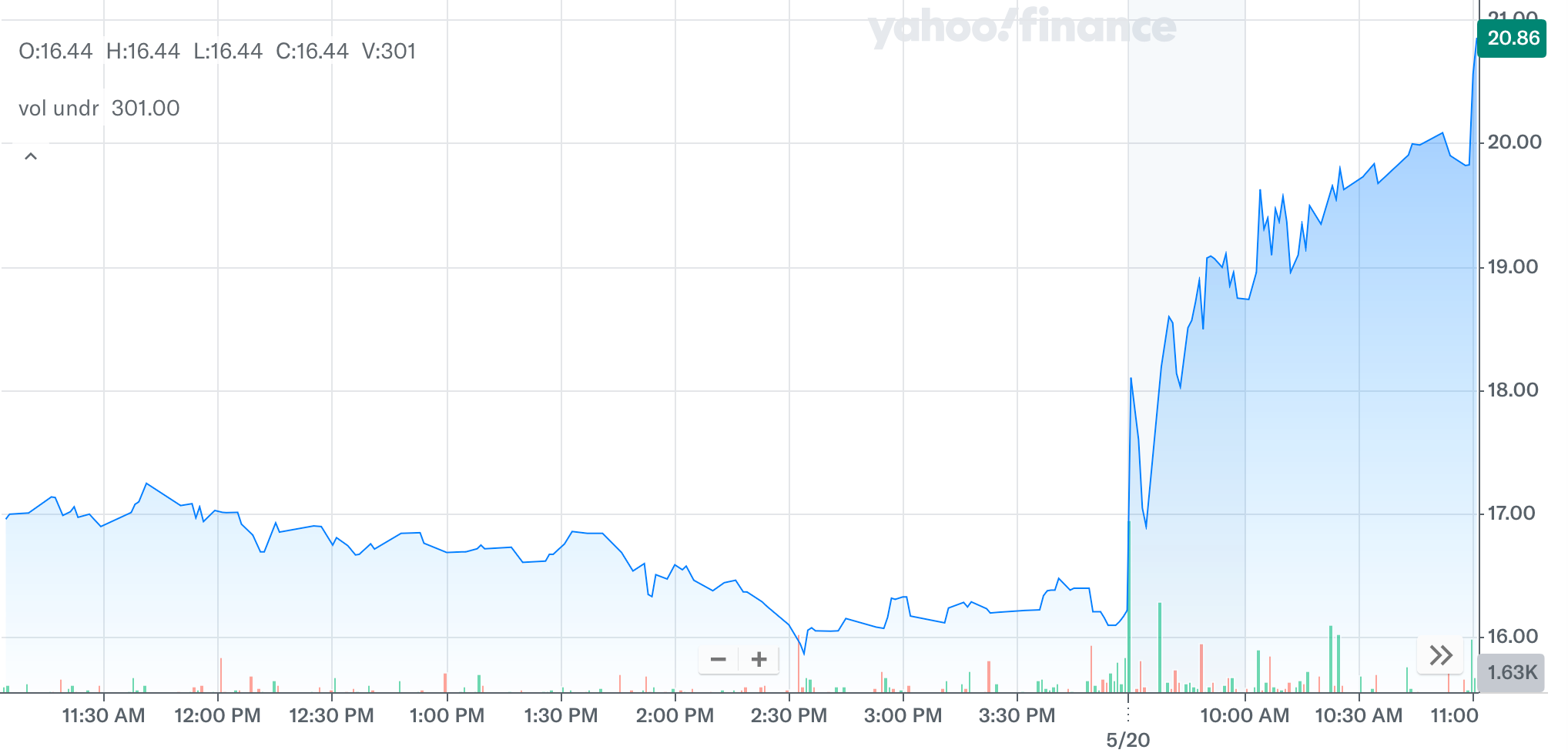
Immunovant shares rallied sharply after the company reported positive new data from its ongoing potentially registrational trial evaluating IMVT-1402 in difficult-to-treat rheumatoid arthritis patients.
The numbers were strong enough that investors largely ignored weaker quarterly earnings results.
According to the company, roughly 73% of patients receiving the 600 mg dose achieved at least a 20% improvement in symptoms after 16 weeks of treatment. More than half achieved a 50% improvement, while 36% reached a 70% improvement in joint-related disease measures. The study enrolled patients who had already failed at least two advanced therapies, making this a particularly difficult-to-treat population.
This isn’t trivial when you consider that rheumatoid arthritis remains a massive commercial market despite growing competition across immunology.
Worth noting: the data continues strengthening the broader investment case surrounding IMVT-1402, which Immunovant increasingly views as its lead long-term asset.
Best in class
The company has already initiated potentially registrational programs across multiple autoimmune diseases, including Graves’ disease, myasthenia gravis, chronic inflammatory demyelinating polyneuropathy (CIDP), Sjögren’s disease, and cutaneous lupus. Management believes IMVT-1402 could potentially become a best-in-class anti-FcRn therapy due to what it describes as strong efficacy, favorable safety characteristics, and convenient self-administered dosing.
That transition is important because Immunovant has spent much of the past year repositioning the pipeline away from batoclimab and toward IMVT-1402.
Earlier this year, the company reported disappointing late-stage thyroid eye disease results involving batoclimab after the therapy failed to meet primary endpoints in two Phase 3 studies. Following those results, management said future development efforts would increasingly prioritize IMVT-1402 instead.
Execution matters
Financially, Immunovant still remains in aggressive growth-and-development mode.
The company reported a quarterly loss larger than analysts expected, and operating losses remain substantial as multiple late-stage autoimmune trials continue expanding simultaneously. But Immunovant also ended last year with more than $560 million in cash before later raising another approximately $550 million through a secondary offering in December 2025. Management says current liquidity should fund operations through the potential commercial launch of IMVT-1402 in Graves’ disease.
For investors, the key issue now becomes execution.
Positive mid-stage autoimmune data alone do not guarantee regulatory approval or commercial success. But the latest rheumatoid arthritis numbers suggest Immunovant may still have one of the more interesting anti-FcRn platforms currently in development, particularly if IMVT-1402 continues producing durable efficacy data across multiple autoimmune indications.




Publication Date
May 20, 2026
Category
Healthcare / Biotech

Jeff Siegel
Senior Content Contributor