
The White House just pulled the trigger on what it’s calling the Genesis Mission.
This is an executive order intended to turn America’s federal science machine into one giant AI-powered discovery engine. It’s a big deal, and whether you like the president or not, this announcement has major implications for investors looking to capitalize on America’s big AI push.
Billed as the largest mobilization of federal scientific resources since the Apollo and Manhattan Project missions, this mission is being led by the Department of Energy (home to the top U.S. supercomputers).
The plan?
To build a unified AI platform that sits on top of DOE supercomputers and cloud capacity. It will train scientific foundation models on decades of government data sets and use AI agents to accelerate work in drug discovery, advanced energy technologies, materials science, and national security applications.
And here’s the angle for investors …
The DOE will do this in partnership with private industry, naming chipmakers and hardware giants as early collaborators on the new AI supercomputers. These include, but are not limited to…
- Nvidia (NASDAQ: NVDA)
The DOE has already tapped Nvidia for some of the biggest AI systems ever built. One new flagship machine at Argonne – Solstice – is slated to run on around 100,000 Nvidia Blackwell GPUs, making it the DOE’s largest AI supercomputer.
- Advanced Micro Devices (NASDAQ: AMD)
AMD is already powering multiple government-backed AI and HPC systems, and the DOE has been explicit about working with both Nvidia and AMD on its next-gen AI infrastructure.
- Hewlett-Packard Enterprise (NYSE: HPE)
You can’t run Genesis without racks, interconnects, and full-stack supercomputers. That’s HPE’s wheelhouse. The company also already builds many of DOE’s supercomputers.
- Dell Technologies (NYSE: DELL)
The White House and DOE have already announced that Dell is one of the hardware partners ready to build supercomputing facilities under the Genesis umbrella.
- Oracle (NYSE: ORCL)
Oracle and Nvidia are jointly building DOE’s largest AI supercomputer, and Oracle and AMD are rolling out a 50,000-GPU AI supercluster in Oracle Cloud Infrastructure next year.
These are the obvious plays, but consider the energy sector as well, as this is really where you get the most bang for your buck.
Bottom line: you can’t run something of this magnitude without an enormous amount of electricity.
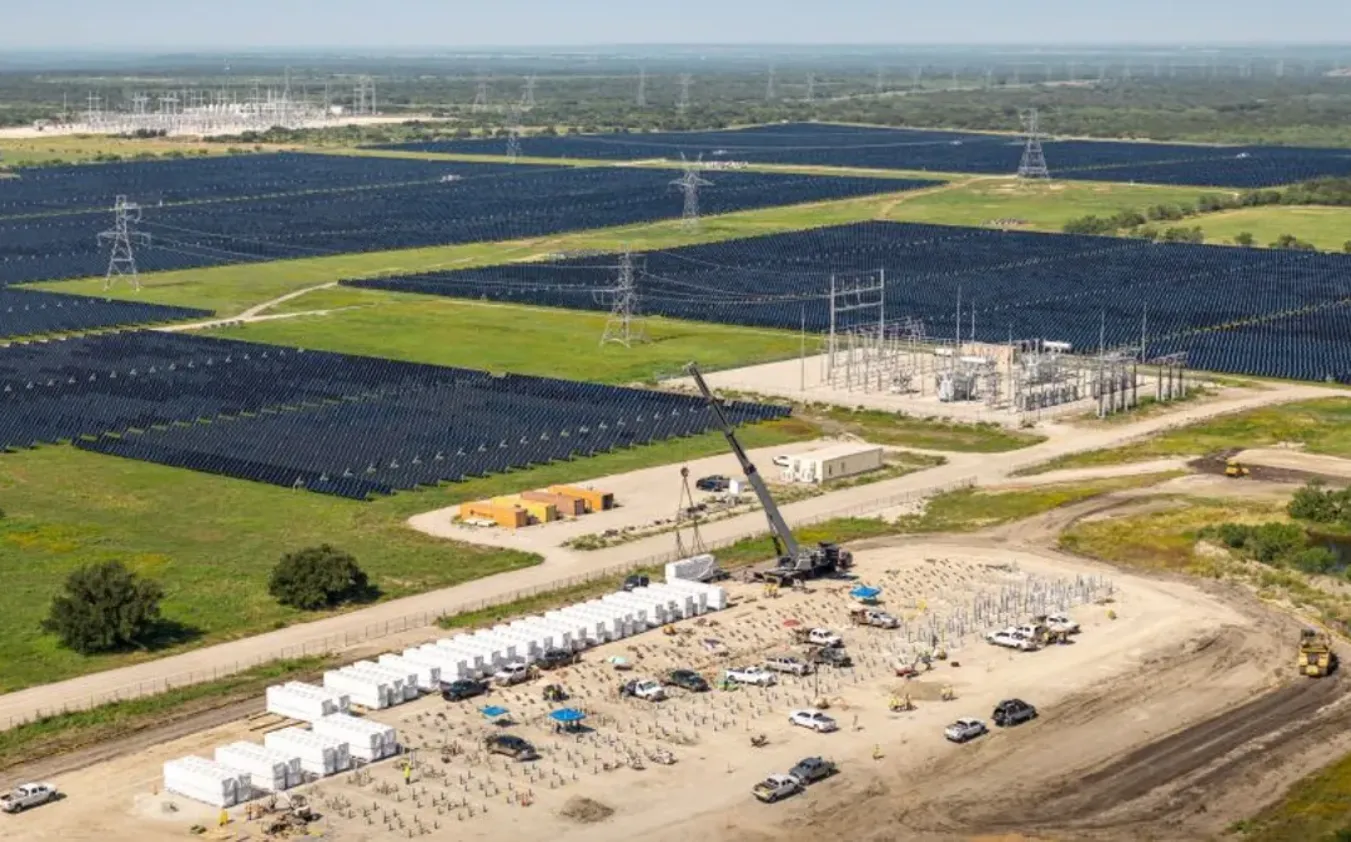
Those most likely to benefit are small nuclear and renewable energy companies that can handle scale and provide robust storage capabilities. These include, but are not limited to:
- NextEra Energy (NYSE: NEE)
- AES Corporation (NYSE: AES)
- Fluence (NASDAQ: FLNC)
- Brookfield Renewable Partners (NYSE: BEP)
- NuScale Power (NYSE: SMR)
- Fluor (NYSE: FLR)
- Lightbridge (NASDAQ: LTBR)
- GE Vernova (NYSE: GEV)
- PowerBank Corporation (NASDAQ: SUUN)
The energy angle is probably the best way to play this, as none of these companies live and die based on policies tied directly to AI development. Not that the future of AI is anything but bright, but overall, energy is just better from a risk tolerance perspective.
Invest accordingly.


Publication Date
November 25, 2025
Category
Technology

Jeff Siegel
Senior Content Contributor