

Global gold ETFs returned to inflows in April, adding $6.6 billion in fresh capital after March's record outflows, according to the World Gold Council. Europe led with $3.7 billion, Asia added $1.8 billion, and North America contributed $1 billion.
To be sure, that's a clean headline number.
But the more interesting signal isn't in the ETF prospectus. It's at the physical delivery window.
Why the Paper Market Is Breaking
Both gold and silver futures are now in backwardation. That is, near-term spot prices are trading above long-dated contracts. That happens when buyers don't trust the exchange to deliver the actual metal when the contract settles.
Worth noting: Chinese buyers are reportedly paying premiums of over 11% for physical silver over futures quotes, which tells you the futures price and the real-world price have come unglued.
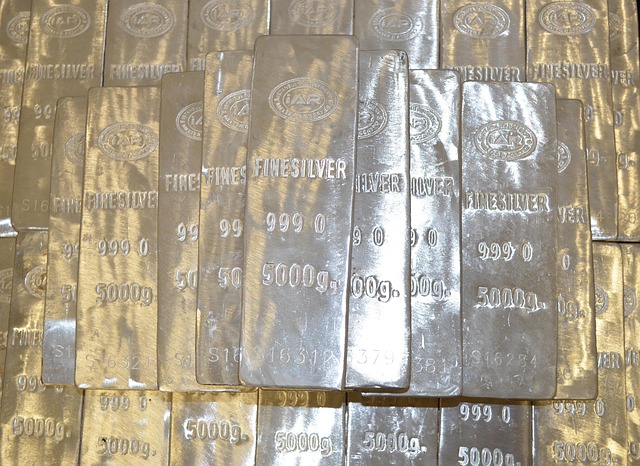
The silver market is the sharper edge of this. The cumulative global silver deficit, which began in 2021, is on track to hit 866 million ounces by the end of 2026 — the sixth consecutive year of supply running behind demand.
What's Driving the Squeeze
There are a few things driving this squeeze:
* The U.S. designated silver a Critical Mineral and strategic asset at the end of 2025
* China controls roughly 70% of the global silver bullion supply and added silver to its rare-earths export-restriction list
* China alone accumulated 800 metric tonnes of silver in Q1 2026
* COMEX registered silver inventories continue to drain — May open interest dropped under 100,000 contracts, a record low
* A bill (H.R. 8007, the "SILVER Act") has been introduced in Congress to help COMEX handle physical delivery demands
What Wall Street Is Quietly Modeling
J.P. Morgan's year-end gold target is $6,300/oz. Goldman Sachs sits at $5,400/oz. Bank of America's silver target is $309/oz — well above the current trading range.
Put simply, the same institutions that move ETF flows are pricing in a much higher floor for the physical metal than the spot tape currently reflects.
Indeed, the structural case is built on numbers that aren't going away:
* U.S. federal interest expense is approaching $1 trillion annually
* The deficit is running near 6–7% of GDP at full employment
* Central banks bought roughly 863 tonnes of gold in 2025
* J.P. Morgan models another ~800 tonnes for 2026
This isn't a trade. It's a slow rebalancing of how sovereigns hold reserves.
The Risk Side
Make no mistake: gold isn't a one-way bet. Real yields are still elevated. The 10-year TIPS yield sat near 1.94% in mid-April, which keeps a meaningful opportunity cost on holding non-yielding metal. The Federal Reserve is pricing higher-for-longer, and if the Strait of Hormuz situation resolves cleanly, the inflation impulse fades and so does some of the bid.
ETF flows are also the swing factor here. They can reverse quickly.
The Takeaway
It's not a gold ETF story. It's a confidence-in-paper story.
When buyers pay double-digit premiums for physical over futures, when exchanges need legislation to handle delivery, and when central banks keep accumulating regardless of price, the ETF inflow number is a lagging indicator, not a leading one.
If you're watching this from the sidelines, pay attention to two things: physical premiums and COMEX registered inventories. Those are where the next move shows up first.




Publication Date
May 17, 2026
Category
Industrials

Jeff Siegel
Senior Content Contributor