
In a move that blends aerospace engineering with next-generation energy strategy, The Boeing Company (NYSE: BA) has partnered with the Israel Institute of Technology to develop a new kind of Sustainable Aviation Fuel (SAF).
This initiative, which is part of Boeing’s push toward zero-emission aviation, marks a step beyond feasibility studies into practical development of commercially viable SAF that could reduce aviation’s carbon footprint while expanding long-term growth opportunities in clean fuels.
If you’re unfamiliar, SAF is a lower-carbon alternative to conventional jet fuel, designed to drop into existing aircraft engines without modifying infrastructure or planes. It can be made from waste oils, agricultural residues, or synthesized using renewable hydrogen and captured CO₂. Under the right processing pathways, it can cut lifecycle greenhouse gas emissions by as much as 80% or more compared to traditional jet fuel.
To be sure, this isn’t being done for some kind of “green” credibility. Regulatory mandates in the EU and other markets are what’s driving increasing SAF blending requirements, creating a structural demand tailwind for lower-carbon fuels.
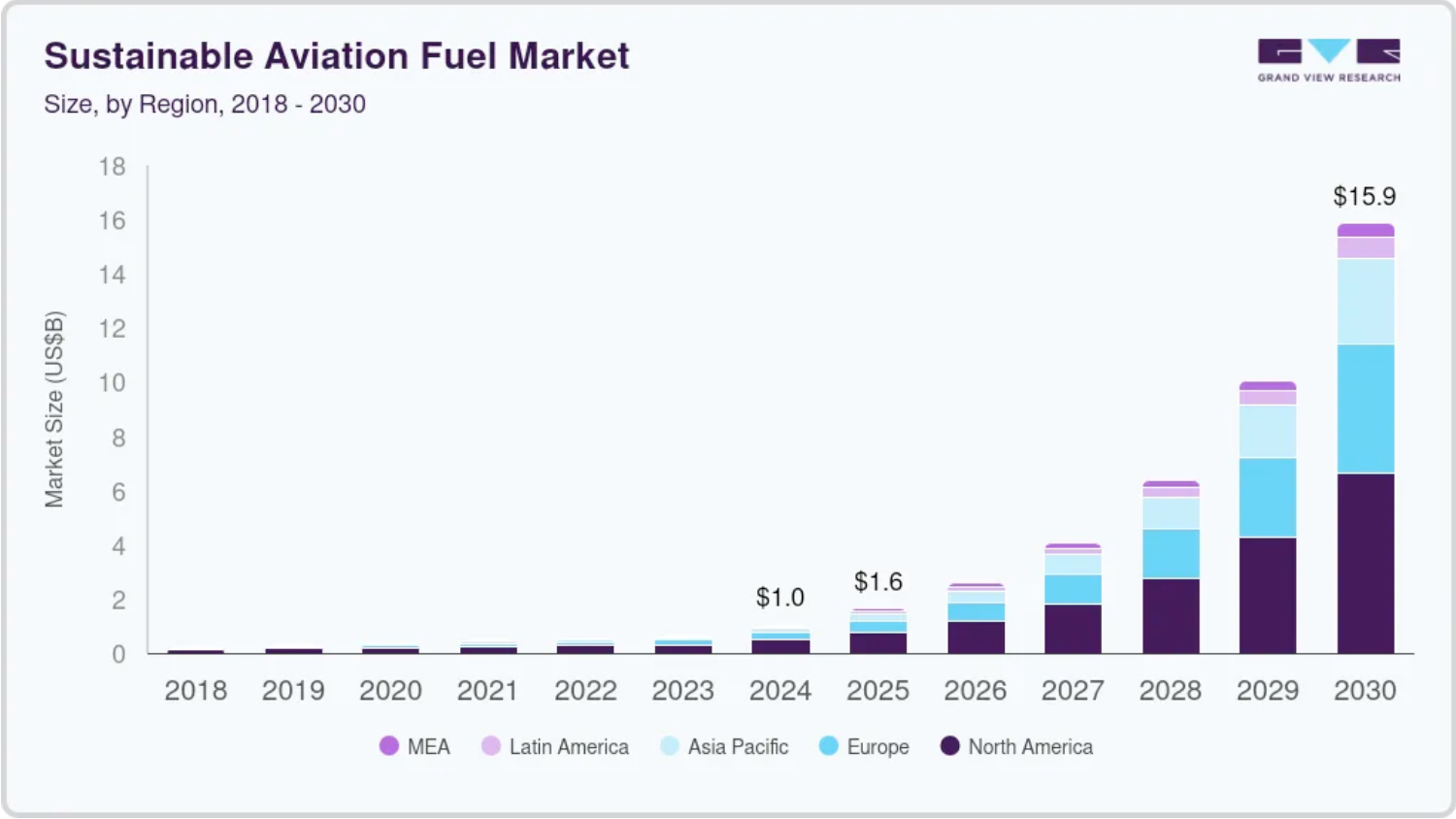
It is because of these regulatory demands that the SAF market could expand from just over $1 billion in 2024 to nearly $16 billion by 2030.
While SAF production costs can still be 2 to 5 times higher than those of conventional jet fuel, they are coming down. And that’s due largely to technological advances being made in both the private and public sectors.
Worth noting: there are a number of public companies actively researching, developing, or producing SAF today. These include, but are not limited to:
- Neste Oyj (OTCBB: NTOIY)
- Gevo, Inc. (NASDAQ: GEVO)
- Aemetis (NASDAQ: AMTX)
- Calumet Specialty Products Partners (NASDAQ: CLMT)
- XCF GlobalCapital (NASDAQ: SAFX)
While it is primariy regulatory mandates that have provided support for this industry, the theory is that the continued reduction in SAF production costs will ultimately make it cost-competotive with traditional jet fuel. If and when that happens, economics, not policy, will move SAF from optional to obligatory.
We’ll find out soon enough.




Publication Date
January 28, 2026
Category
Industrials

Jeff Siegel
Senior Content Contributor