Disseminated on behalf of PowerBank Corporation
A few months back, I penned an article entitled: The SpaceX IPO Won’t Be About Rockets – It’ll Be About Data Centers in Space.
In that article, I argued that ultimately, the biggest profits SpaceX will deliver will be connected to its goal of putting data centers in space, writing ....
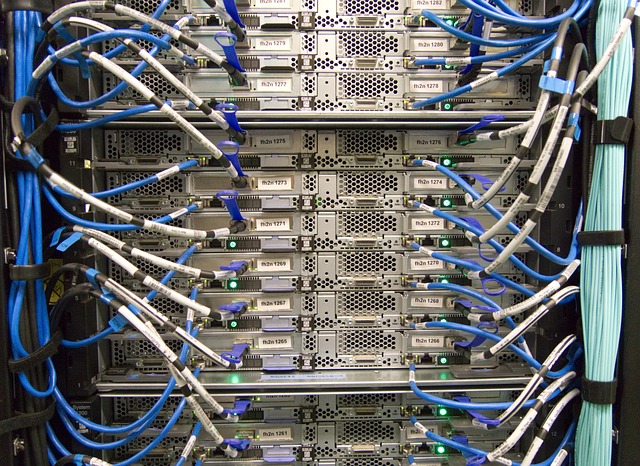
“... Earth-based data centers are running into hard limits: power shortages, cooling constraints, land scarcity, and grid bottlenecks.
AI and crypto mining have turned data centers from passive infrastructure into energy-hungry beasts, and demand is accelerating faster than utilities can respond. Musk has openly said that compute and power are the true bottlenecks of the AI era, not chips. And that’s the backdrop for why space-based data centers represent the next “big thing” in tech.”
Since that article was published, there’s been an absolute avalanche of stories about this next technological breakthrough. But from an investor's point of view, I thought it would be worthwhile to highlight some of the business leaders, investors, and CEOs who are turning this lofty vision into reality.
After all, if we seek to profit from this new industry - projected to be valued at around $700 billion in just 10 years - it’s certainly worth looking into the folks that are making this happen.
- Elon Musk
If data centers are going to space, they need a ride. That makes Musk foundational.
Through SpaceX, he has driven launch costs down dramatically. Reusability changed the economics of orbit. What used to cost hundreds of millions of dollars per launch now costs a fraction of that.
Without cheap, reliable, repeatable access to orbit, the concept of orbital data infrastructure dies on the whiteboard.
Musk doesn’t just control rockets. He controls the cost curve that makes space-based data centers even conceivable.
- Jeff Bezos
Bezos, through Blue Origin, is playing the long game: heavy lift, infrastructure, and orbital industrialization.
While SpaceX dominates cadence, Blue Origin’s ambitions center on building the industrial backbone of space: large payload capacity, station infrastructure, and long-duration presence.
If space data centers move from experimental to scaled platforms, orbital construction becomes decisive. Bezos is building for that scenario.
- Jensen Huang
You can’t talk about data centers (terrestrial or orbital) without talking about NVIDIA (NASDAQ: NVDA), and its CEO, Jensen Huang.
To be sure, Huang doesn’t launch rockets. He builds the engines of AI.
Every AI-driven data center, whether in Nevada or low-Earth orbit, runs on advanced GPUs and accelerators. As compute density increases and power demand skyrockets, the question becomes: where can you sustainably deploy that hardware?
If the space-based thesis proves viable, NVIDIA goes with it. Huang’s influence is structural. Wherever AI scales, NVIDIA sits at the core.
- Sundar Pichai
AI demand isn’t theoretical for Google (NASDAQ: GOOG) and its CEO, Sundar Pichai. It’s existential.
From search to cloud to generative AI infrastructure, hyperscalers are hitting real constraints around power availability and data center expansion. And grid limitations are slowing growth in key markets.
Pichai’s world is about ensuring compute capacity never becomes a bottleneck to AI scale.
If orbital or space-adjacent data centers can provide reliable solar power and off-planet cooling advantages, hyperscalers will explore them. Perhaps quietly at first, but strategically later.
The companies that consume the most compute will shape where data centers go.
- Philip Johnston
While billionaires grab headlines, the less visible players often build the connective tissue.
Philip Johnston is part of the leadership pushing space-based infrastructure concepts forward at Starcloud. The thesis is straightforward: AI’s power demand is exploding, terrestrial grids are strained, and future compute growth may require looking beyond Earth-bound constraints.
At Starcloud, the focus isn’t just on launching hardware, it’s on designing orbital infrastructure capable of supporting high-density computing environments. That means thinking through deployment logistics, continuous solar exposure, in-space power management, and the integration of orbital platforms with terrestrial data ecosystems.
- Dr. Richard Lu
PowerBank (NASDAQ: SUUN) CEO Dr. Richard Lu operates where ambition meets engineering reality. And quite frankly, is one of the most important pieces to this puzzle.
You see, in sectors like space-based energy and orbital data centers, the headlines are about rockets and AI chips. But the real challenge isn’t launching hardware, it’s integrating complex systems into something that actually works, scales, and survives in orbit.
This is not a single-discipline problem. It’s aerospace engineering, power systems design, grid economics, materials science, and AI infrastructure planning, all stacked together.
That’s where Dr. Lu’s role becomes strategic.
PowerBank’s role isn’t to build GPUs or rockets. It’s to rethink the energy backbone supporting space-based solar and orbital infrastructure that can deliver continuous power.
A component of the company’s planned broader strategy centers on energy infrastructure designed to support high-demand digital ecosystems, including satellite-based AI networks and distributed compute architectures. That means the company is intending to:
- Evaluating space-based solar generation as a long-term power source
- Studying energy transmission pathways from orbit
- Designing systems that align with terrestrial grid economics
- Integrating energy and compute planning instead of treating them as separate silos
Dr. Lu represents the technical mind behind that integration.
Truth is, launching servers into orbit is the easy part to imagine. Keeping them powered, cooled, synchronized, and economically viable is the hard part.
PowerBank is evaluating these matters through its collaboration with Orbit AI. Orbit AI has completed an initial launch of an AI satellite into low Earth orbit. PowerBank is discussing the terms with Orbit AI of its potential contributions towards solar and thermal energy matters for future satellite launches.
When space-based data centers become viable at scale, it won’t be because someone had a bold vision alone. It will be because people like Dr. Lu solved the invisible layers: power reliability, system resilience, cost per kilowatt-hour in orbit, and integration with Earth-based infrastructure.
In emerging industries, there are visionaries and architects.
Vision builds the narrative.
Architecture builds the future.
Forward Looking Statements
This report contains forward-looking statements and forward-looking information within the meaning of Canadian securities legislation (collectively, “forward-looking statements”) that relate to the Company’s current expectations and views of future events. Any statements that express, or involve discussions as to, expectations, beliefs, plans, objectives, assumptions or future events or performance (often, but not always, through the use of words or phrases such as “will likely result”, “are expected to”, “expects”, “will continue”, “is anticipated”, “anticipates”, “believes”, “estimated”, “intends”, “plans”, “forecast”, ”projection”, “strategy”, “objective” and “outlook”) are not historical facts and may be forward-looking statements and may involve estimates, assumptions and uncertainties which could cause actual results or outcomes to differ materially from those expressed in such forward-looking statements. In particular and without limitation, this report contains forward-looking statements pertaining to the Company’s expectations regarding industry trends and overall market growth; intentions of hyperscalers and large technology companies regarding power needs, contracts or acquisitions; the details of the collaboration with Orbit AI and its expected benefits; the Company’s contributions towards the collaboration with Orbit AI; the timelines for Orbit AI’s operations the Company’s growth strategies, and the size of the Company’s development pipeline. No assurance can be given that these expectations will prove to be correct and such forward-looking statements included in this report should not be unduly relied upon. These statements speak only as of the date of this report.
Forward-looking statements are based on certain assumptions and analyses made by the Company in light of the experience and perception of historical trends, current conditions, and expected future developments and other factors it believes are appropriate, and are subject to risks and uncertainties. In making the forward looking statements included in this report, the Company has made various material assumptions, including but not limited to: t ; Orbit AI and the Company are able to agree on commercial terms for the announced collaboration; obtaining the necessary regulatory approvals; that regulatory requirements will be maintained; general business and economic conditions; the Company’s ability to successfully execute its plans and intentions; the availability of financing on reasonable terms; the Company’s ability to attract and retain skilled staff; market competition; the products and services offered by the Company’s competitors; that the Company’s current good relationships with its service providers and other third parties will be maintained; and government subsidies and funding for renewable energy will continue as currently contemplated. Although the Company believes that the assumptions underlying these statements are reasonable, they may prove to be incorrect, and the Company cannot assure that actual results will be consistent with these forward-looking statements. Given these risks, uncertainties and assumptions, investors should not place undue reliance on these forward-looking statements.
Whether actual results, performance or achievements will conform to the Company’s expectations and predictions is subject to a number of known and unknown risks, uncertainties, assumptions and other factors, including those listed under “Forward-Looking Statements” and “Risk Factors” in the Company’s most recently completed Annual Information Form, and other public filings of the Company, which include: Orbit AI is unable to raise sufficient financing to complete its launch of satellites on the timelines proposed or at all; Orbit AI and the Company fail to agree on commercial terms for the announced collaboration; technical risks associated with Orbit AI’s planned operations; the Company may be adversely affected by volatile solar power market and industry conditions; the execution of the Company’s growth strategy depends upon the continued availability of third-party financing arrangements; the Company’s future success depends partly on its ability to expand the pipeline of its energy business in several key markets; governments may revise, reduce or eliminate incentives and policy support schemes for solar and battery storage power; general global economic conditions may have an adverse impact on our operating performance and results of operations; the Company’s project development and construction activities may not be successful; developing and operating solar Project exposes the Company to various risks; the Company faces a number of risks involving Power Purchase Agreements (“PPAs”) and project-level financing arrangements; any changes to the laws, regulations and policies that the Company is subject to may present technical, regulatory and economic barriers to the purchase and use of solar power; the markets in which the Company competes are highly competitive and evolving quickly; an anti-circumvention investigation could adversely affect the Company by potentially raising the prices of key supplies for the construction of solar power projects; foreign exchange rate fluctuations; a change in the Company’s effective tax rate can have a significant adverse impact on its business; seasonal variations in demand linked to construction cycles and weather conditions may influence the Company’s results of operations; the Company may be unable to generate sufficient cash flows or have access to external financing; the Company may incur substantial additional indebtedness in the future; the Company is subject to risks from supply chain issues; risks related to inflation and tariffs; unexpected warranty expenses that may not be adequately covered by the Company’s insurance policies; if the Company is unable to attract and retain key personnel, it may not be able to compete effectively in the renewable energy market; there are a limited number of purchasers of utility-scale quantities of electricity; compliance with environmental laws and regulations can be expensive; corporate responsibility may adversely impose additional costs; the future impact of any global pandemic on the Company is unknown at this time; the Company has limited insurance coverage; the Company will be reliant on information technology systems and may be subject to damaging cyberattacks; the Company may become subject to litigation; there is no guarantee on how the Company will use its available funds; the Company will continue to sell securities for cash to fund operations, capital expansion, mergers and acquisitions that will dilute the current shareholders; and future dilution as a result of financings.
The Company undertakes no obligation to update or revise any forward-looking statements, whether as a result of new information, future events or otherwise, except as may be required by law. New factors emerge from time to time, and it is not possible for the Company to predict all of them, or assess the impact of each such factor or the extent to which any factor, or combination of factors, may cause results to differ materially from those contained in any forward-looking statement. Any forward-looking statements contained in this report are expressly qualified in their entirety by this cautionary statement.




Publication Date
February 23, 2026
Category
Technology

Jeff Siegel
Senior Content Contributor